A Structural Wall Changed the Entire Kitchen Strategy
Navigating the intersection of load-bearing necessity and modern open-concept aspirations in a mid-century residential renovation.
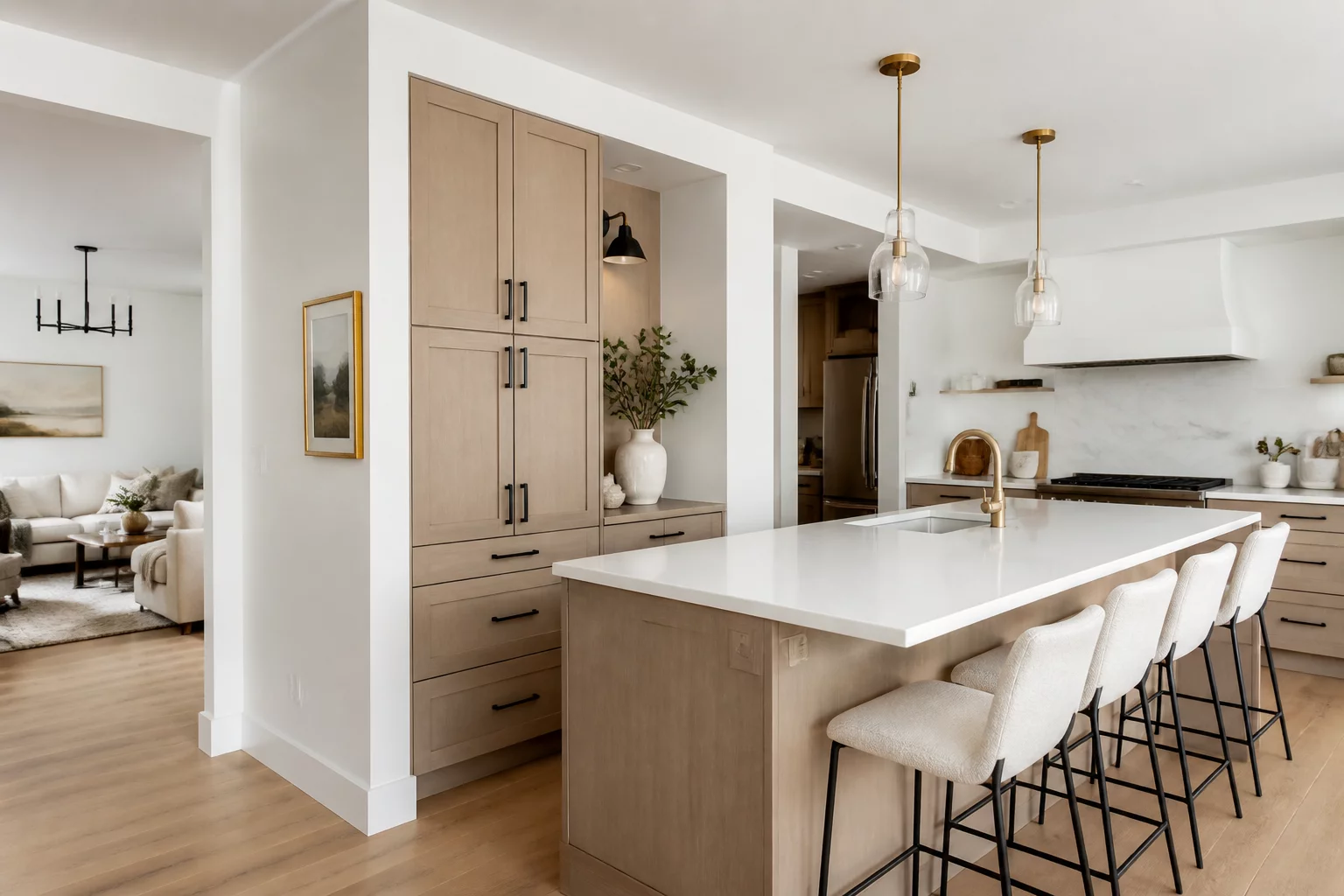
This case study examines a common but complex renovation challenge: the late-stage discovery of a critical load-bearing wall where the homeowner desired a completely open-plan kitchen. When initial plans for a 24-foot clear span were compromised by structural reality, the project team had to pivot to a solution that honored both architectural integrity and the client's aesthetic vision.
Structural Analysis
During the demolition phase of this 1960s ranch renovation, our team uncovered a central vertical member that acted as a primary load-bearing pivot for the roof's ridge beam. This wall was not merely a partition but a structural anchor points for the entire rear portion of the house. Removing it completely would have required the installation of a massive recessed steel I-beam, a maneuver that would have inflated the budget by approximately $18,000 and required substantial foundation reinforcement.
Instead of fighting against the structure, we worked to celebrate it. The design team proposed widening a specific 48-inch section of the wall to integrate a hidden HVAC return and wrapping the entire column in custom-milled walnut that matched the new cabinetry. This transformed a perceived failure of the open-plan dream into a striking architectural feature that defines the kitchen's entrance.
The result was a G-shaped kitchen layout that utilizes the pillar as a terminal point for a new breakfast bar. By leaning into the constraint, we maintained the feeling of openness while avoiding the intrusive ceiling bulkheads often required by heavy steel headers.
Primary Load-Bearing Stud Wall
Double 2x6 Douglas Fir Studs
14' Parallam PSL Header
3,400 lbs Point Load
Very insightful case study on structural walls. It shows how critical it is to have an engineer on-site during demo.
This helped me understand my own kitchen remodel constraints. Sometimes the most beautiful features are born out of necessity.